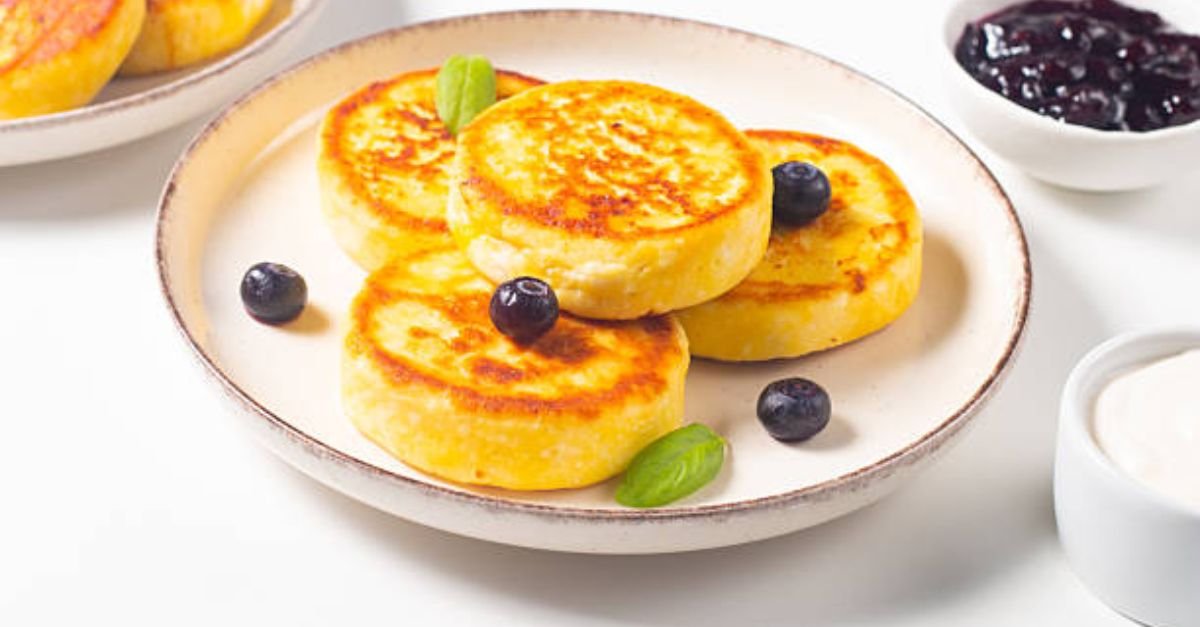
Description
These Golden Cottage Cheese Pancakes are crisp and beautifully browned on the outside while staying soft, tender, and cheesy in the center. Cottage cheese gives them a naturally rich texture and adds protein to this comforting breakfast.
They’re a delicious choice for high-protein breakfasts, protein-rich snacks, and satisfying meal-prep recipes. Serve them warm with Greek yogurt, fresh berries, or a drizzle of honey for a sweet breakfast, or pair them with herbs and vegetables for a savory version.
Short 3-Line Description
Golden cottage cheese pancakes are crisp around the edges and tender inside.
Cottage cheese adds a creamy texture and a boost of protein.
Serve them warm for breakfast, brunch, or a satisfying high-protein snack.
Can This Golden Cottage Cheese Pancakes Recipe Support Weight Loss Goals?
Yes, these pancakes can fit into a balanced weight-management eating pattern, particularly because cottage cheese contributes protein that can make a meal more satisfying.
For a lower-calorie version, use low-fat cottage cheese, limit added butter or oil, and serve with berries or Greek yogurt rather than calorie-dense toppings. Portion size still matters because flour, eggs, cheese, and cooking fat all contribute calories.
Does Golden Cottage Cheese Pancakes Fit a High Protein Lifestyle?
Yes, cottage cheese and eggs make these pancakes a useful protein-rich breakfast option.
Their net carbs depend mainly on the amount and type of flour used in the recipe.
Using a small amount of oat or all-purpose flour keeps the pancakes tender while allowing the cottage cheese to remain the primary ingredient.
For an even higher-protein meal, serve them with Greek yogurt or additional cottage cheese and fresh berries.
My Personal Experience
I don’t have personal eating experiences, so these recipe-specific observations can be adapted into first-person notes for your food blog.
- The golden crust makes these pancakes especially inviting.
Cooking them over moderate heat gives the outside a deeply browned, slightly crisp finish. - Cottage cheese keeps the center pleasantly tender.
The small curds create little pockets of creamy texture throughout each pancake. - They are filling without needing complicated ingredients.
Cottage cheese and eggs provide the protein foundation while a small amount of flour helps hold everything together. - They work with both sweet and savory toppings.
Fresh berries and yogurt create a breakfast-style serving, while herbs and vegetables make them suitable for a savory plate.
Perfect For:
These cottage cheese pancakes are ideal for high-protein breakfasts, low-carb-friendly breakfasts, protein-rich snacks, brunches, meal prep, post-workout meals, healthy comfort food, quick weekday breakfasts, and family brunches.
For a higher-protein plate, serve them with Greek yogurt, cottage cheese, eggs, or turkey on the side.
Why You’ll Love This Recipe
- Protein-rich ingredients
Cottage cheese and eggs provide the main protein contribution in every serving. - Crispy golden edges
Pan-cooking develops a delicious browned crust while the center stays tender. - Soft cottage cheese center
The cheese creates a moist texture that keeps the pancakes from becoming dry. - Simple ingredients
You only need a handful of everyday ingredients to make them. - Versatile toppings
They can be served sweet with fruit or savory with herbs and vegetables. - Meal-prep friendly
Cooked pancakes can be refrigerated and reheated for an easy breakfast.
Common Mistakes to Avoid
- Using very watery cottage cheese — Excess moisture can make the batter too loose and difficult to flip.
- Making the pancakes too thick — Very thick pancakes may brown before the center is fully cooked.
- Cooking over high heat — The exterior can burn while the cottage cheese center remains soft.
- Flipping too early — Wait until the underside is golden and the edges look set before turning.
Required Equipment
- Large non-stick skillet — Helps the delicate cottage cheese pancakes release cleanly.
- Mixing bowl — Provides enough room to combine the cottage cheese batter evenly.
- Fork or whisk — Breaks up large cottage cheese clumps and blends the eggs.
- Flexible spatula — Makes flipping the pancakes easier without breaking them.
- Measuring cups and spoons — Keep the batter proportions consistent.
Storage Instructions
Allow the pancakes to cool before storing.
- Refrigerator: Store in an airtight container for 3–4 days.
- Freezer: Freeze for up to 2 months, placing parchment between pancakes to prevent sticking.
- Refrigerator meal prep: Separate individual portions before refrigerating for convenient breakfasts.
- Reheating: Warm in a skillet over low to medium-low heat for 2–3 minutes per side.
- Air fryer: Reheat at 350°F (175°C) for 3–5 minutes for crispier edges.
- Microwave: Heat for about 30–60 seconds, although the exterior will become softer.
Recipe Details
Preparation Time: 10 minutes
Cooking Time: 15 minutes
Total Time: 25 minutes
Servings: 4
Best Season: All-season
Total Calories: Approximately 250 calories per serving
Calories are an approximate estimate and will vary according to the cottage cheese, flour, eggs, and cooking oil or butter used.
📝 Ingredients
- 2 cups (about 450 g) cottage cheese
- 2 large eggs
- ½ cup (60 g) all-purpose flour
- 2 tablespoons grated Parmesan cheese, optional
- ½ teaspoon baking powder
- ½ teaspoon salt
- ¼ teaspoon black pepper
- ½ teaspoon garlic powder, optional for a savory version
- 1 tablespoon chopped fresh parsley or chives
- 1–2 tablespoons butter or olive oil, for cooking
Ingredient note: If your cottage cheese is very wet, drain it briefly through a fine-mesh strainer before mixing. Small cottage cheese curds can be left intact for a more textured pancake.
Directions
1. Prepare the cottage cheese — 2 minutes
Place the cottage cheese in a large bowl.
If it contains a lot of liquid, drain it first.
For a smoother pancake, mash the cottage cheese lightly with a fork.
Texture cue: A few small curds are desirable; the mixture does not need to be completely smooth.
2. Make the batter — 3 minutes
Add the eggs and whisk until combined.
Stir in flour, baking powder, salt, black pepper, Parmesan, and garlic powder if using.
Fold in the fresh herbs.
Mix just until combined.
High-protein tip: Avoid adding excessive flour; cottage cheese should remain the primary ingredient.
3. Rest the batter — 5 minutes
Allow the mixture to rest for 5 minutes.
This gives the flour time to absorb some moisture and makes the batter easier to portion.
4. Heat the skillet — 2 minutes
Place a non-stick skillet over medium-low to medium heat.
Add a small amount of butter or olive oil.
The pan should be hot enough to create a gentle sizzle but not so hot that the butter immediately browns.
5. Cook the pancakes — 3–4 minutes
Spoon approximately ¼ cup of batter into the skillet for each pancake.
Gently spread each portion into a round about ½ inch thick.
Cook for 3–4 minutes.
Visual cue: The bottom should become deep golden brown and the edges should look set.
6. Flip carefully — 2–3 minutes
Slide a flexible spatula underneath each pancake.
Flip gently.
Cook the second side for another 2–3 minutes over medium-low heat.
Texture cue: The pancakes should feel firm enough to lift without collapsing, with a golden crust on both sides.
7. Repeat
Continue with the remaining batter, adding a little more butter or oil to the pan as needed.
Avoid overcrowding the skillet.
8. Serve
Serve the pancakes hot.
For a sweet version, top with Greek yogurt and berries.
For a savory high-protein breakfast, serve with eggs, herbs, tomatoes, or turkey.
Nutrition Facts
Per Serving – Approximate
| Nutrient | Amount |
|---|---|
| Calories | ~250 kcal |
| Fats | ~10 g |
| Cholesterol | ~115 mg |
| Sodium | ~520 mg |
| Potassium | ~180 mg |
| Total Carbohydrates | ~19 g |
| Fiber | ~1 g |
| Net Carbs | ~18 g |
| Sugars | ~3 g |
| Protein | ~20 g |
| Calcium | ~170 mg |
Nutrition values are approximate estimates and depend on the cottage cheese, flour, eggs, Parmesan, and cooking fat used.
Notes
- Storage: Keep cooked pancakes refrigerated in an airtight container for 3–4 days.
- Freezing: Place parchment between individual pancakes before freezing.
- Reheating: A skillet or air fryer gives the best texture.
- Allergy notes: Contains milk, eggs, and wheat/gluten.
- Gluten-free option: Use a suitable gluten-free flour blend.
- Higher-protein option: Replace part of the flour with additional cottage cheese and serve with Greek yogurt.
- Sweet variation: Omit garlic, pepper, and herbs; add a little vanilla and cinnamon instead.
- Savory variation: Add dill, chives, spinach, or finely chopped green onion.
- Extra crispiness: Use a well-preheated skillet and avoid adding too much oil.
Frequently Asked Questions
1. Can I use low-fat cottage cheese?
Yes, low-fat cottage cheese works well and can reduce the calories and fat while maintaining a good protein contribution.
2. Can I make these pancakes without flour?
Yes, although the pancakes will be softer and more delicate, so they should be flipped carefully.
3. Why are my cottage cheese pancakes falling apart?
The batter may contain too much moisture or may not have enough flour to bind the ingredients.
4. Can I make these pancakes sweet?
Yes, omit the savory seasonings and add cinnamon, vanilla, and a small amount of sweetener or fruit.
5. Can I freeze cottage cheese pancakes?
Yes, freeze them individually with parchment between the pancakes and use them within about two months for best quality.
6. What is the best topping for these pancakes?
Greek yogurt and berries make a protein-friendly sweet topping, while herbs, eggs, and vegetables work beautifully for a savory version.
